
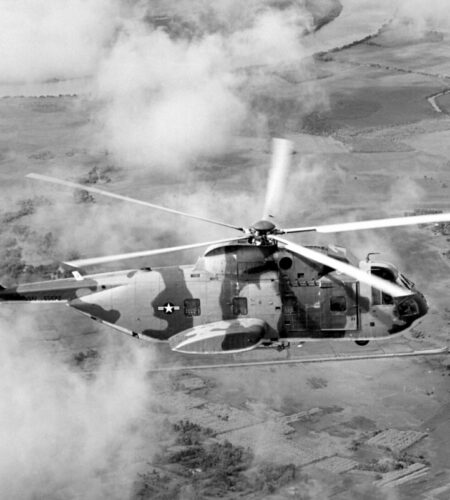
The Vietnam War was one of the most turbulent and controversial conflicts in modern history, and the images captured during this time remain as haunting today as they were decades ago. Unlike any war before it, Vietnam was documented in raw, unfiltered detail, bringing the brutal realities of combat, protest, and loss into living rooms across the world. From soldiers navigating the dense jungles to civilians caught in the crossfire, these photographs tell a story of chaos, resilience, and the heavy toll of war. Some of these images became symbols of the era, sparking outrage, grief, and a growing anti-war movement. Others reveal the quieter, more personal moments of those who lived through the conflict. Each photograph carries with it a weight that lingers, a reminder of a war that shaped a generation and left a lasting impact on history.
Look Closer At This Marine’s Helmet

This Marine has inscribed on his helmet a record of the fact he fought at and survived the Battle of Hill 875. Hill 875 was a horrifically and ferociously fought over strategic hill during the Battle of Dak To in November of 1967. The American 4th Infantry Division and 173rd Airborne Brigade helped South Vietnamese forces push back a major North Vietnamese offensive, which had been aimed at destroying as many South Vietnamese and U.S. units as possible and maximizing casualties to demoralize both armies. Soldiers often put messages on their helmets to reflect their experience or thoughts on the war.
What A Find
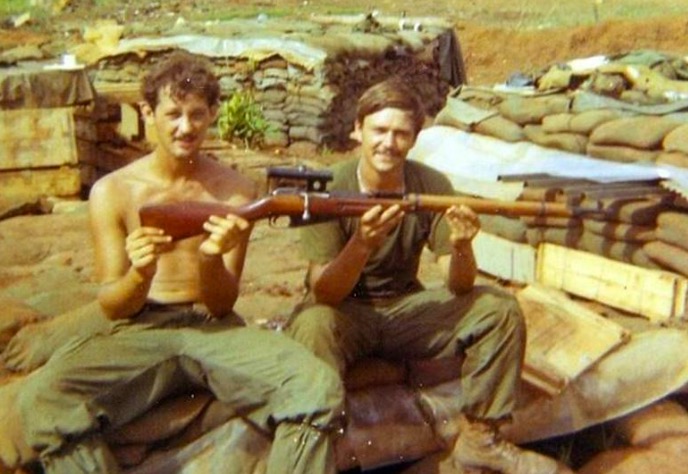
Two U.S. soldiers show captured Mosin-Nagant sniper rifle to the camera. The Mosin-Nagant was a Russian rifled provided in large numbers by the Soviet Union to North Vietnamese forces. Although the Soviet Union did not send troops to support their ally, North Vietnam, they provided extensive amounts of material support in the form of weapons and other equipment. The weapons they did provide were often surplus supplies from World War II, such as this rifle shown, which the Soviets had massive stockpiles of and little need for themselves.
Aerial Assaults
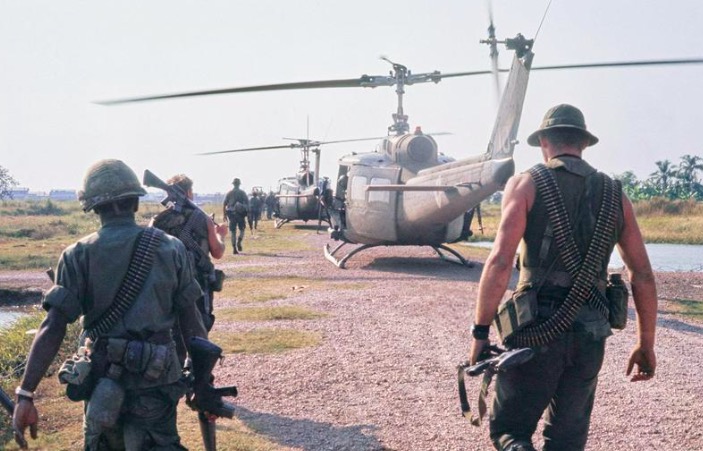
Due to the difficulty of navigating the jungle in between towns and villages, as well as on the way to North Vietnamese positions, the United States used helicopter units, called Air Cavalry, in order to attack by air. The image of Hueys attacking has become one of the most enduring popular images of the conflict. Films and popular media have contributed to this enduring image greatly: films such as Apocalypse Now and Platoon feature prominent scenes with aerial assaults via helicopter.
The Ham Rong Bridge Had To Exist

The Ham Rong Bridge in North Vietnam was a critical crossing point over the Ma River, making it a strategic target for bombings during the Vietnam War. This photograph from 1973 shows a construction team tasked with repairing the bridge after multiple attacks had severely damaged it.
Soldiers Listening to the Moon Landing
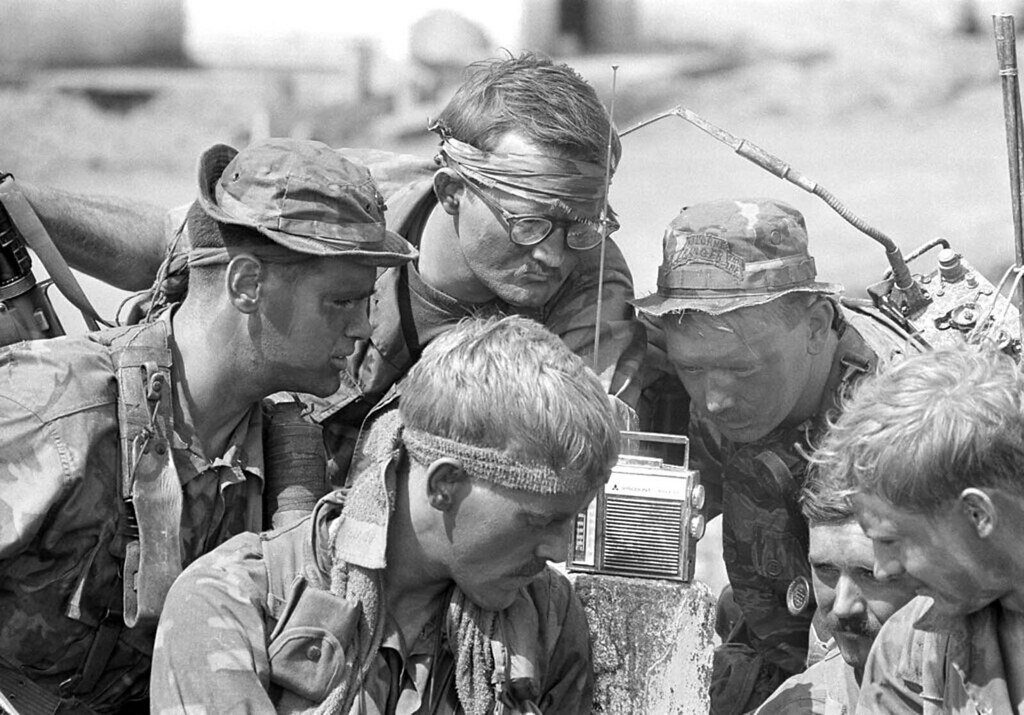
In the middle of the Vietnamese jungle, a group of American soldiers gathers around a radio, listening intently to the broadcast of humanity’s first steps on the moon. It’s a surreal scene, underscoring the contrast between the world’s technological advances and the primitive, brutal conditions of war. As they listened to the awe-inspiring achievement of the Apollo 11 mission, these soldiers faced a harsh reality grounded in survival, with the knowledge that their lives were at risk every day. This juxtaposition highlights the strange duality of the era: progress and destruction, hope and despair.