

History is full of puzzles that continue to stump experts, leaving behind more questions than answers. How was Stonehenge built with such massive stones transported from miles away? What was the secret formula behind Greek Fire, the Byzantine weapon that could burn on water? And what hidden messages lie within Linear A, the undeciphered script of the ancient Minoans? These historical mysteries remain unsolved, teasing us with fragments of the past while keeping their full stories just out of reach. Despite centuries of study, they still have us scratching our heads—and wondering what other secrets history has yet to reveal.
Roman Dodecahedrons
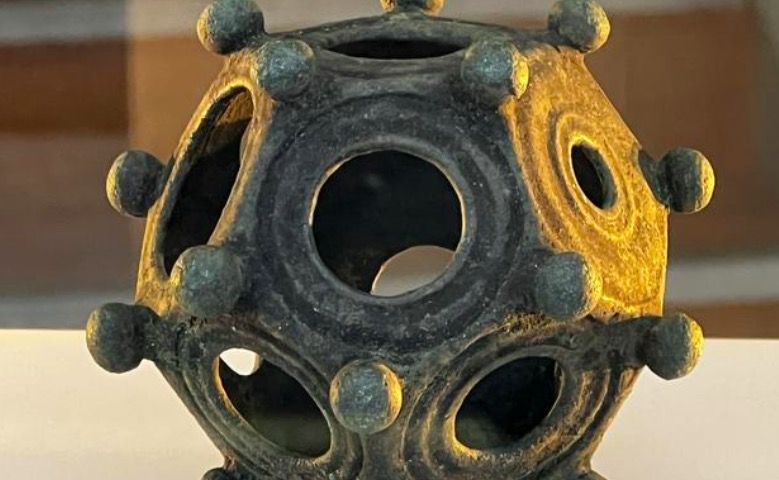
Roman dodecahedrons are perplexing artifacts that have puzzled archaeologists for centuries. These small, hollow objects, typically made of bronze or stone, feature twelve pentagonal faces, each adorned with a circular hole. Found across the former Roman Empire, from Britain to Hungary, their exact purpose remains a subject of debate. While some theories suggest they were used as candle holders or measuring devices, others propose they served ritual or religious functions. Despite their widespread distribution, the true significance of Roman dodecahedrons continues to elude us, inviting speculation and curiosity about the lives and beliefs of the ancient Romans who crafted them.
Stonehenge
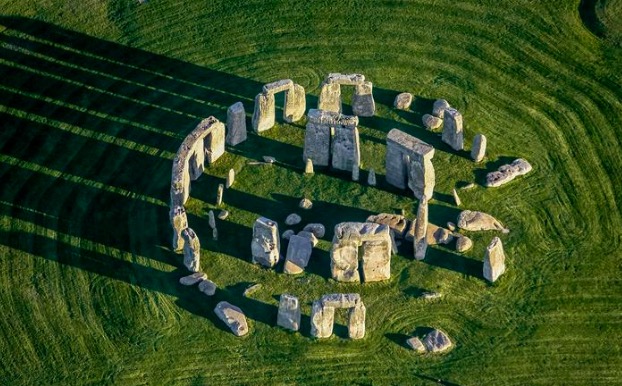
Perched on the windswept Salisbury Plain in England stands Stonehenge, one of the world’s most iconic and enigmatic ancient monuments. Comprised of massive standing stones arranged in a circular formation, Stonehenge has puzzled archaeologists and historians for centuries. Built in several phases over a span of thousands of years, the monument’s exact purpose and significance remain the subject of speculation and debate. Some theories suggest it served as an astronomical observatory or a sacred site for religious ceremonies and rituals, while others propose it was a burial ground or a symbol of unity and power for the surrounding communities. The precise methods used by its Neolithic builders to transport and erect the massive stones, some weighing up to 25 tons, continue to inspire awe and admiration. Despite the passage of time and the ravages of weathering, Stonehenge remains a timeless symbol of human ingenuity and the enduring mysteries of our ancient past.
The Voynich Manuscript
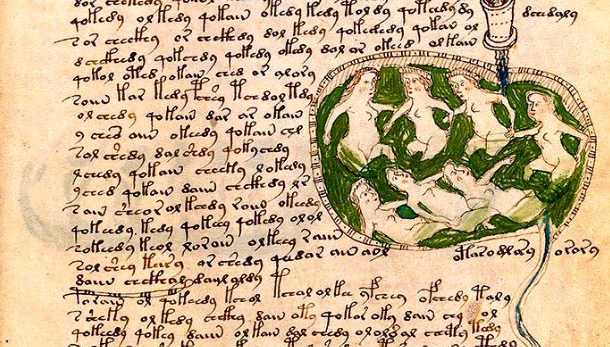
The Voynich Manuscript stands as one of the most perplexing puzzles in the annals of human history. Dating back to the early 15th century, this ancient tome is adorned with intricate illustrations of plants, celestial bodies, and enigmatic figures, accompanied by a text written in a script that has defied decipherment by scholars for centuries. Named after the rare book dealer Wilfrid Voynich, who acquired it in 1912, the manuscript’s origins, purpose, and meaning remain shrouded in mystery. Some speculate that it is a lost work of alchemy or an elaborate hoax, while others suggest it may contain knowledge of esoteric or even extraterrestrial origins. Despite the efforts of countless cryptographers and linguists, no definitive translation of the Voynich Manuscript has ever been achieved, leaving its secrets locked away in a realm of speculation and intrigue. As the centuries pass, the enigma of the Voynich Manuscript continues to confound and fascinate, a testament to the enduring allure of unsolved mysteries and the boundless depths of human curiosity.
Greek Fire
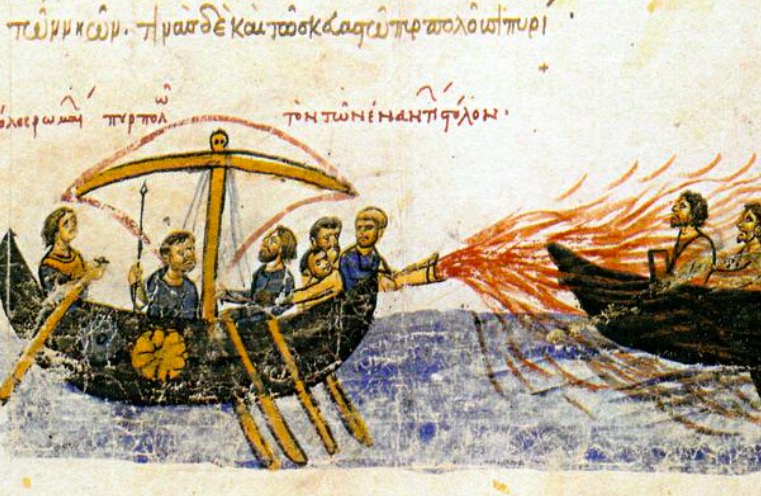
Greek Fire stands as one of the most formidable and mysterious weapons in the history of warfare. Developed by the Byzantine Empire in the 7th century, this incendiary substance was deployed with devastating effect against enemy ships and armies. Unlike conventional weapons of the time, Greek Fire could burn fiercely even on water, making it a potent tool for naval combat. The exact composition of Greek Fire remains a closely guarded secret, lost to the annals of history. Some accounts describe it as a highly flammable liquid that could be projected through tubes or siphons, while others suggest it was ignited upon contact with water or air. Whatever its precise formulation, Greek Fire struck fear into the hearts of adversaries and played a crucial role in the defense of the Byzantine Empire for centuries. Despite numerous attempts by rival powers to replicate its potency, the secret of Greek Fire was never fully revealed, leaving it as a tantalizing enigma of ancient warfare.
Linear A
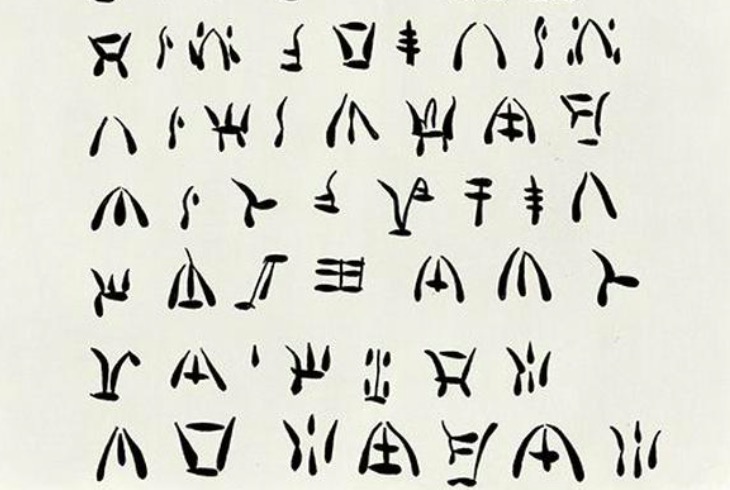
Linear A, an ancient script developed by the Minoan civilization of Crete during the Bronze Age, remains one of the most tantalizing linguistic puzzles in archaeology. Used primarily for administrative and accounting purposes, Linear A was inscribed on clay tablets and other artifacts, yet its precise meaning and linguistic origins remain elusive. Unlike its successor, Linear B, which was deciphered in the 1950s, Linear A continues to resist attempts at translation. The script’s complexity, coupled with the absence of bilingual texts or known languages related to it, has confounded scholars for decades. Despite ongoing efforts, the secrets of Linear A remain locked away, leaving us to wonder about the language and culture of the enigmatic Minoans who once thrived amidst the sun-drenched landscapes of ancient Crete.