
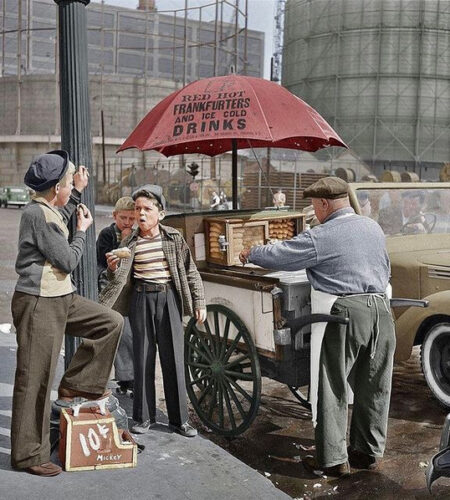
History is often told through its most famous moments, but some of the most fascinating stories are hidden in the forgotten corners of the past. These rare images capture glimpses of everyday life, major events, and cultural shifts that shaped America in ways both big and small. From bustling city streets frozen in time to long-lost traditions that once defined a generation, each photo offers a unique look at a world that no longer exists. Some of these moments were once headline news, while others quietly faded from memory—but all of them help paint a richer, more detailed picture of the country’s past. Whether surprising, poignant, or just plain fascinating, these forgotten images remind us that history is made up of the moments we choose to remember—and those we almost lost.
Cliff House

Perched precariously on the cliffside, the grand old Cliff House looms over the shore like a ghostly sentinel. Its Victorian architecture is both elegant and eerie, a striking contrast against the wild waves below. The children playing on the sand seem oblivious to the building’s haunted grandeur, a relic of a world that has since disappeared into the mist.
A Desolate Desert Landscape
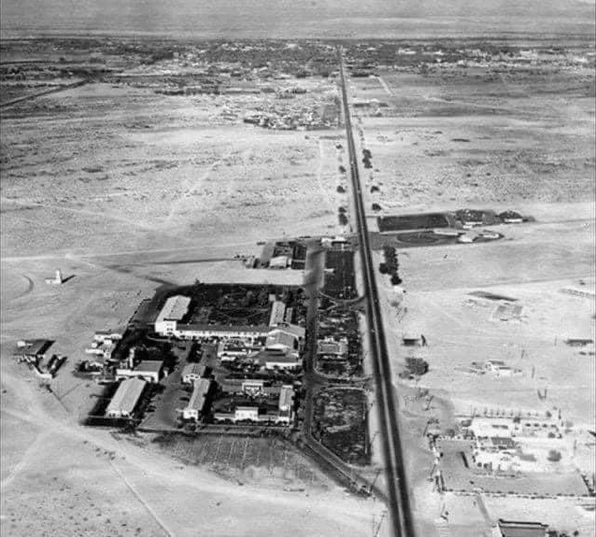
This aerial view of an early desert settlement and roadways is haunting in its isolation. A single highway stretches endlessly through the barren land, connecting scattered buildings that look like they could be swallowed by the desert at any moment. The photograph highlights the vastness and desolation of the landscape, evoking a sense of loneliness and vulnerability.
The Norwegians Diptheria Outbreak
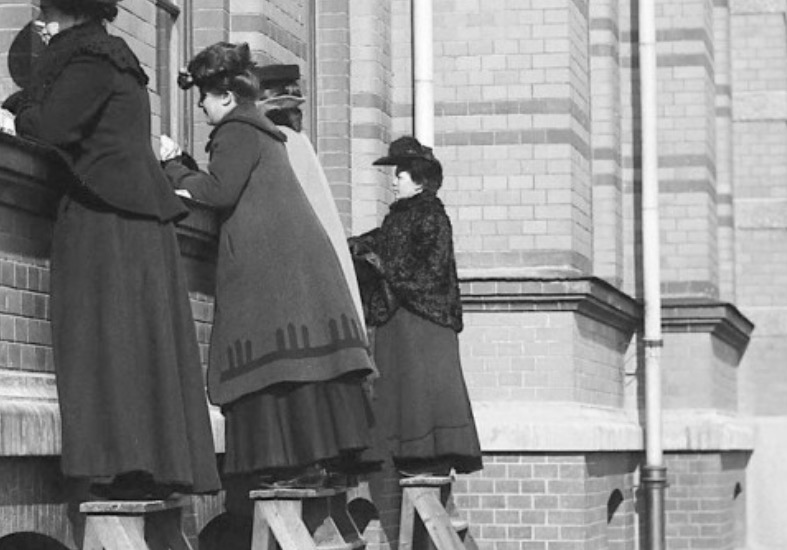
This photograph from, taken during a diphtheria outbreak in Norway, shows women perched on ladders outside a quarantine building, peering through the windows to visit their sick loved ones. The building, known as Ullevål Hospital, was used as a lazaretto. At this quarantine facility, contagious patients were isolated to prevent the spread of disease. The image poignantly illustrates the lengths families would go to stay connected during illness, even when physical proximity was impossible.
The First Skyscraper in Milwaukee

The first skyscraper in Milwaukee, the 14-story neo-gothic Pabst Building, was constructed in 1891 by the owner of Pabst Brewing Company, Frederick Pabst. When it was completed, the Pabst Building was the tallest building in Milwaukee, a title it held for only four years when the Milwaukee City Hall was built. Frederick Pabst was known to involve himself in various civic projects, like the construction of the Pabst Building. He built the Pabst Theater, an opera house, in 1895, and helped to organize the Wisconsin National Bank. The Pabst Building was demolished in 1981.
The Remnants Of A Plane Crash Into the Empire State Building (1945)
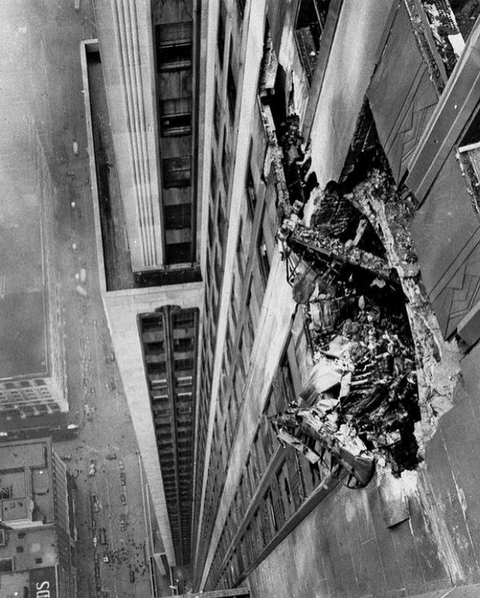
The aftermath of a B-25 bomber crash into the Empire State Building is both shocking and surreal. The gaping hole in the building’s facade and the mangled wreckage hanging precariously over the edge evoke horror at the sheer force of impact. Debris and twisted metal spill out, a stark reminder of the chaos that ensued when the bomber lost its way in the fog. The photograph captures a terrifying moment in New York’s history, revealing how disaster can strike even the most iconic landmarks. The high angle intensifies the sense of vertigo, making it impossible to look away from the catastrophe.