
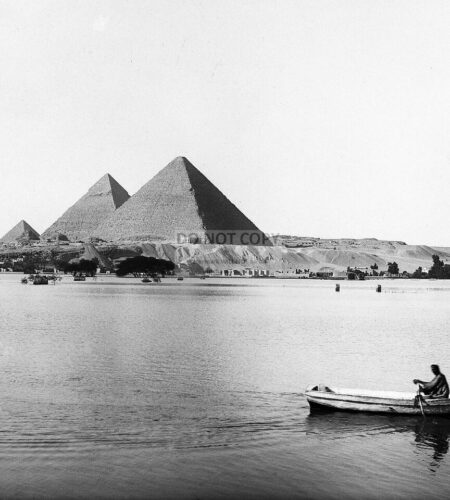
It’s impossible to understand the pure power of something like the Great Wall of China, or the Pyramids of Giza without getting up close and personal with them. The incredible man made structures that we’re looking at today are some of the greatest wonders of the world, sound off in the comments if you’ve seen them in person. We’d love to hear your stories.
The Great Wall of China
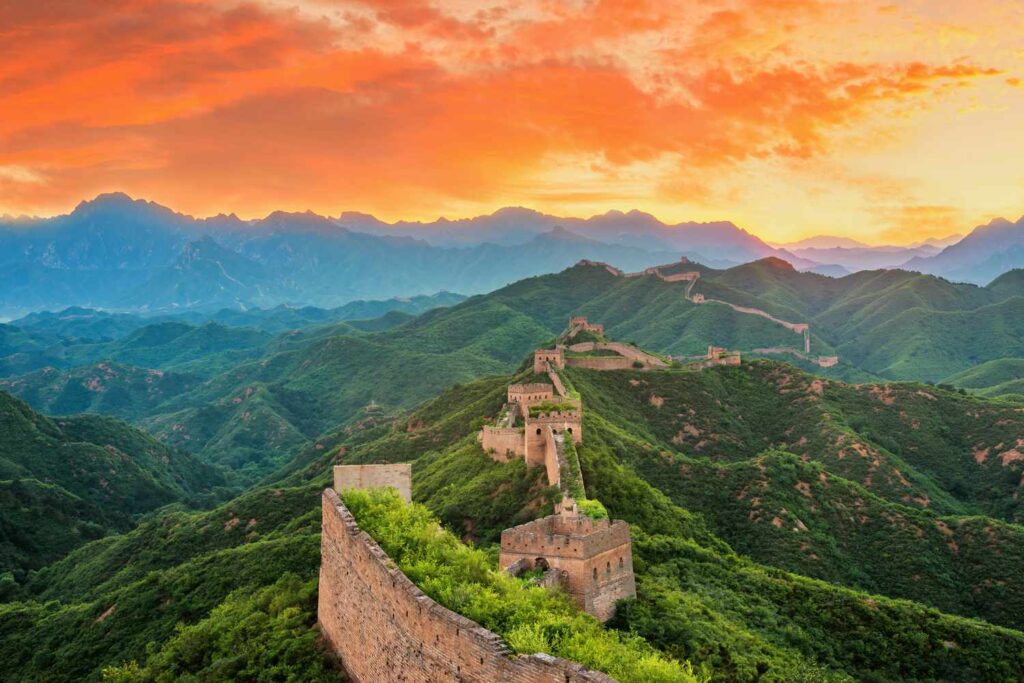
Workers constructed the Great Wall of China across the historical northern borders of ancient Chinese states and Imperial China as fortifications against nomadic groups. The earliest parts of the wall date back to the 7th century BC while the newest parts date to about 200 BC. According to the National Cultural Heritage Administration of China, the wall is 13,170.70 miles long, an undeniably impressive length. From its start near Dunhuang, Gansu, China, to its end at the Bohai Sea, there are 10,051 wall sections, 1,764 trenches, 29,510 individual buildings and 2,211 defensive fortifications. The oldest parts of the wall are built from earth, but in about 1368, the workers started using lime or stone bricks that they often held in place with sticky rice mortar. Workers used mud to construct the western part of the wall. More recently, workers have reconstructed many of the areas near major tourist destinations.
The Great Pyramid of Giza
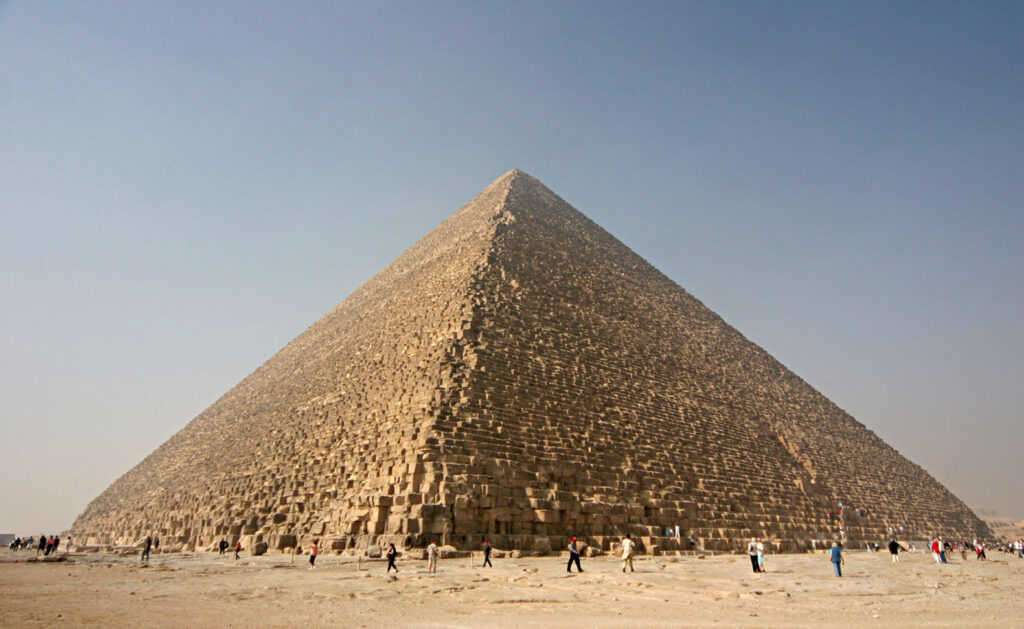
Workers toiled for almost 30 years during the first half of the 26th century BC to construct the Great Pyramid of Giza, the largest Egyptian pyramid. It is the final resting spot of Pharaoh Khufu, the second ruler of the Fourth Dynasty of the Old Kingdom. This pyramid is the northernmost pyramid in the Giza Pyramid Complex. For more than 3,800 years, it was the tallest man-made structure in the world. When visitors see the Great Pyramid of Giza, they view the inner part of the pyramid as limestone originally covered the exterior. The pyramid consists of three chambers, with the lowest chamber below ground. Workers used approximately 2.3 million blocks, each weighing about 2.5 tons, to construct the pyramid. They took the stone from a nearby quarry, but workers brought other materials from over 500 miles away. The corners of the pyramid roughly align with the four geographic cardinal directions, an achievement that still boggles the minds of scholars to this day.
Discover the Timeless Elegance of Petra, Jordan
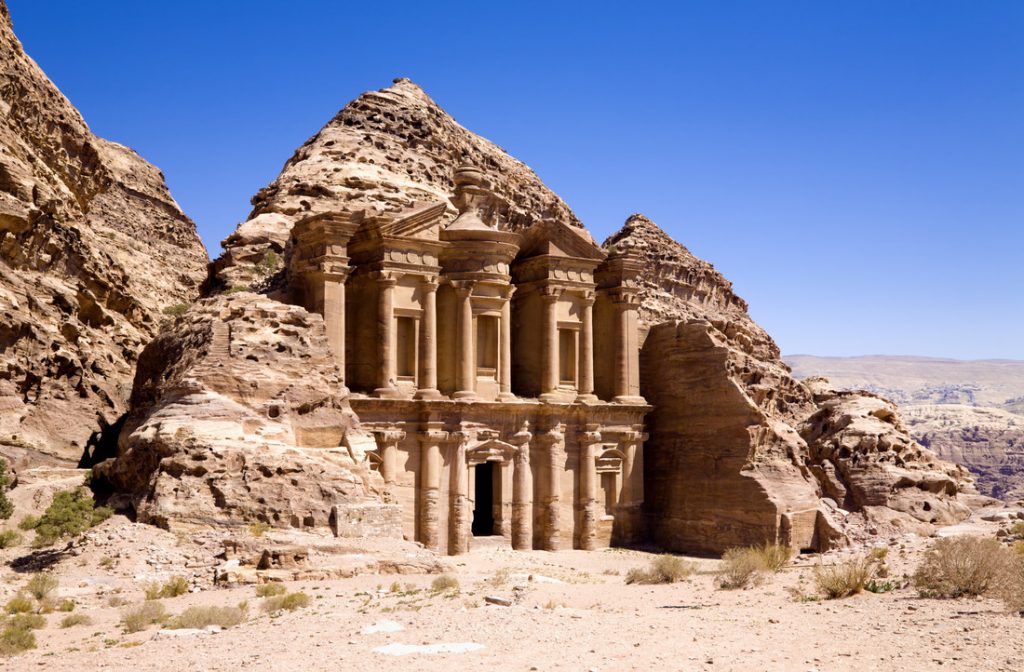
The Nabataeans had settled in Petra, Jordan, by the 2nd century BC, and they were famous for creating a desert city of unique rose-colored sandstone quarried from the local hills. Workers built dams, cisterns and water conduits to control water, allowing them to store it for prolonged periods of drought. The city contains many examples of Hellenistic architecture. The most significant monument in Petra is the monastery, measuring 148 feet tall and 160 feet wide. The Al-Khazneh treasury is the most elaborate building. This structure at the narrow end of the Sig Gorge contains hundreds of bullet holes put there by local Bedouin tribes who believed the structure contained great riches. Nearby is the theater, positioned so that visitors can see most of the tombs. Also nearby is the Petra Pool and Garden Complex, which contains a large swimming pool, an island pavilion and an intricate hydraulic system.
Italy’s Iconic Colosseum Is a Gladiatorial Marvel That Stands Proud
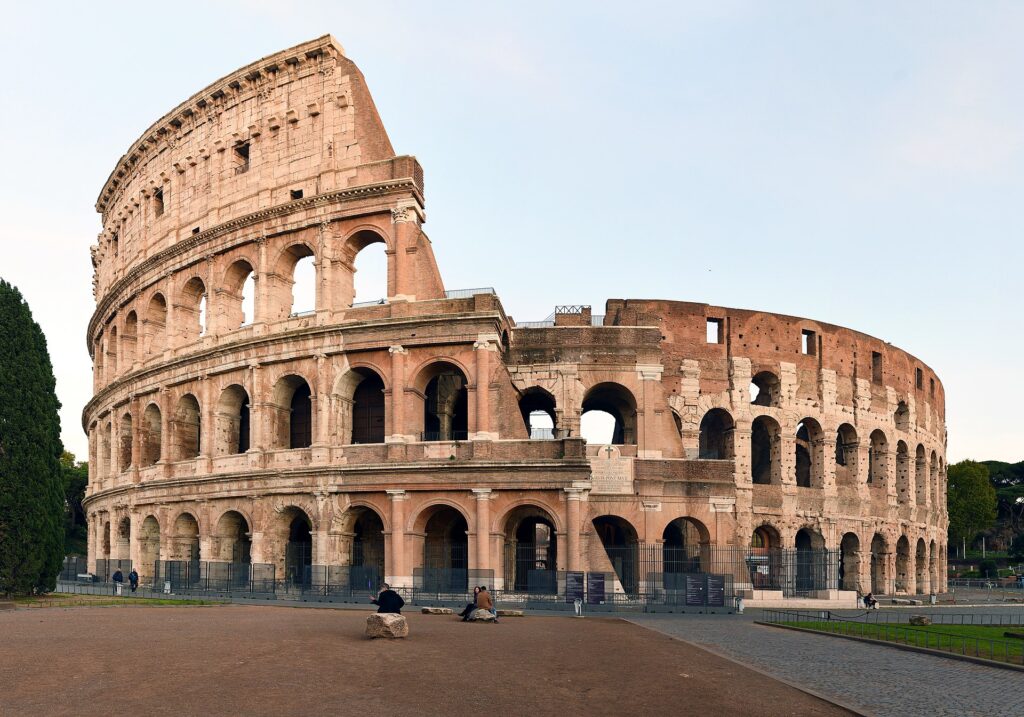
Despite construction starting in 70 AD, the Colosseum in Rome is the largest amphitheater ever built . Emperor Vespasian ordered workers to begin building the limestone, volcanic rock and brick-faced concrete amphitheater, and it took them over 10 years to finish. Experts generally assume that many of those workers were Jewish prisoners of war who officials returned to the city following the First Jewish–Roman War. Workers constructed the outer walls of the Colosseum of about 3.5 million cubic feet of stone held together by 300 tons of iron clamps. Initially, the Colosseum had a retractable awning that people could position to provide shade and a breeze for spectators. The Colosseum had 80 entrances so that spectators could quickly enter and leave the facility. Seating in the elliptical Colosseum was by class. The king and Vestal Virgins were seated on the north and south ends, so they got the best views, while senators were seated along the sides. Above them, the non-senatorial noble class or knights were seated while ordinary citizens were seated above them.
India’s Taj Mahal

The Taj Mahal on Yamuna River’s shore in Agra, Uttar Pradesh, India, was commissioned by Mughal Emperor Shah Jahan to house the tomb of his wife, Mumtaz Mahal, who died in 1631 while giving birth to the couple’s 14th child. Architect Ustad Ahmad Lahori led a crew of 20,000 workers to construct the main building in 1643 but work on surrounding buildings continued until about 1653. The main building’s onion dome, which stands 115 feet tall, makes this one of the most recognizable sites in the world. The outside of the building contains marvelous examples of Mughal architecture created by artists using paint, stones and stucco. Its interior has many examples of lapidary made with precious and semi-precious gemstones. Sixteen sunken gardens surround the main building, with gardeners labeling most plants with their scientific names. Red sandstone walls enclose the main complex on three sides, with smaller mausoleums containing the emperor’s other wives and his favorite servant near the walls.