
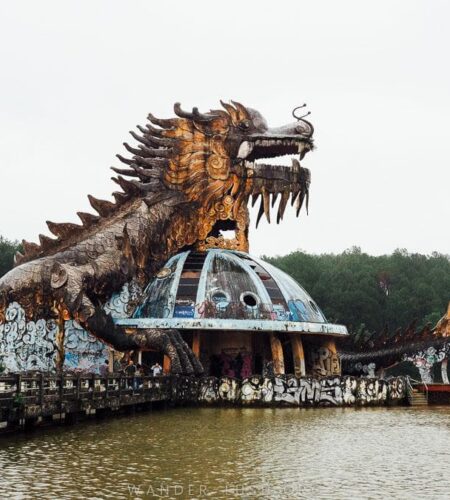
There’s something undeniably haunting about abandoned places—the eerie silence, the crumbling walls, the way nature slowly takes over what was once full of life. These forgotten spaces, from deserted mansions to crumbling factories and ghost towns frozen in time, offer a glimpse into the past, whispering stories of those who once walked their halls. Some remain untouched, left exactly as they were decades ago, while others are nearly unrecognizable, reclaimed by the earth. Look closer at these abandoned places, and you’ll see more than just decay—you’ll see history fading, memories lingering, and time standing still.
The Romanian Valley of Geamana

In the Romanian valley of Geamana, a once-thriving village lies beneath a toxic flood. The village’s downfall began in the 1970s when the valley became involved in copper mining and was flooded. What remains today is a haunting image of a church steeple piercing through a chalky, chemical-laden lake. This eerie scene is a stark reminder of the devastating impact of industrial pursuits on the environment and the communities that once called this place home.
Gunkanjima Island Exposes a Silent Industrial Warship
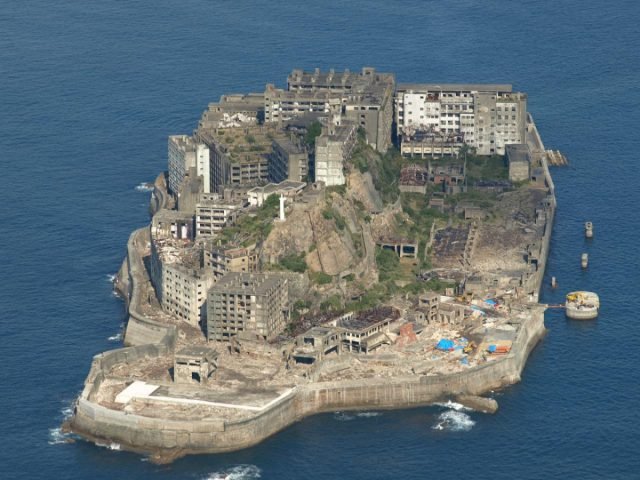
Also known as Hashima Island, Gunkanjima rests on the coast of Japan, revealing a surreal military visage among the region’s desolate waves and unforgiving waters. From a distance, the island’s distinctive silhouette of this isolated island is often mistaken for a battleship at sea. Once heavily populated, the conspicuous land mass used to support a thriving coal mining industry in Japan from the late 1880s until its ultimate abandonment in 1974. The island’s expansive concrete structures and deserted block apartments reveal the rapid historical rise of Japanese industry. The now-crumbling ruins, silent dwellings, and blown-out windows among the shifting waves surrounding them stand as haunting reminders of how quickly a thriving civilization can reverse course and ultimately fall.
Hachijo Royal Hotel
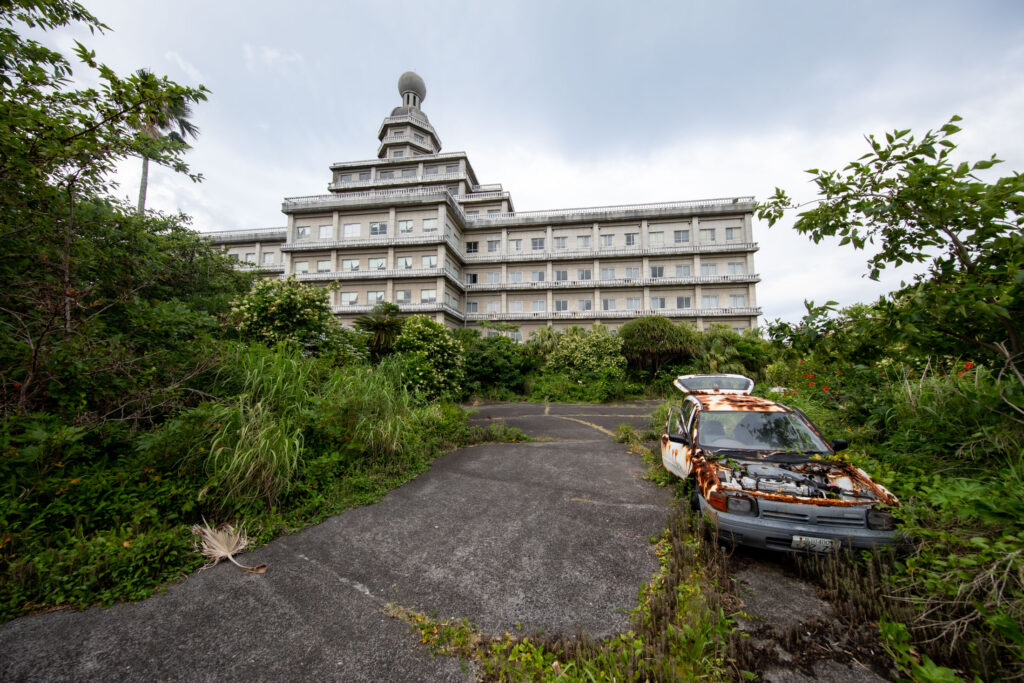
The lush volcanic island of Hachijojima once supported the thriving Hachijo Royal Hotel as a popular honeymoon destination until its ultimate demise in 2006. The hotel emblemized the Japanese luxury tourism market, while the nation routinely advertised the island as the “Hawaii of Japan.” The hotel opened in the early 1960s, drawing guests to impressive halls and spacious hot springs baths set against the backdrop of the island’s natural splendor. The hotel underwent a series of name changes in an attempt to reinvent itself, finally rebranding as the Hachijo Oriental Resort before ultimately closing in 2006. The island’s intense tropical head and saltwater caused the hotel to rapidly deteriorate after routine maintenance stopped. The venue is a ghost of its former self as the natural elements persistently take over the site.
Majestic Fantasy Meets Reality at the Abandoned Castles of Burj Al Babas, Turkey
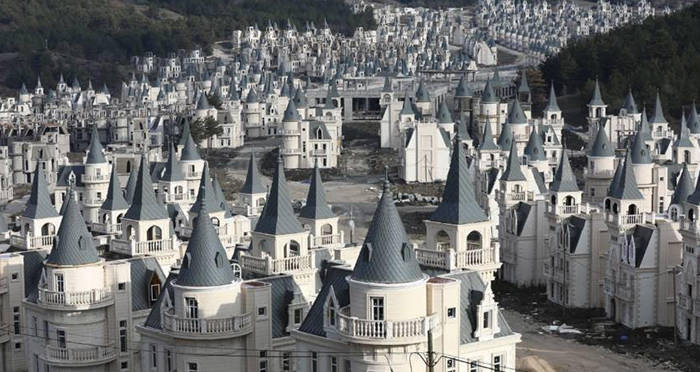
An unexpected view from lush and verdant Turkish countryside near Mudurnu, the castles of Burj Al Babas appear as if out of an ancient fairytale. This surreal development of virtually hundreds of min-castles was imagined as a luxury housing project for wealthy international investors. The project broke ground in 2014, aiming for a blend of contemporary grandiosity and Old World luxury. The homes were constructed in the Neo-Gothic style with pointed spires and ornate classical facades. The well-manicured surrounding landscape displayed hints of social extravagance and financial distinction. A struggling economy and the developer’s bankruptcy brought this once-fanciful dream to an unexpected halt, leaving the expanse unfinished. The skeletal chateaus are still there, providing a surreal vista of wonderment and reflection over this once-ambitious real estate endeavor.
The Ho Thuy Tien Waterpark

The Ho Thuy Tien Waterpark in Hue, Vietnam, is a haunting reminder of the impermanence of human endeavors. Opened prematurely in 2004, the park never attracted the expected number of visitors and was soon abandoned. Today, the surrounding wilderness is slowly overtaking the park’s dilapidated structures. At the same time, local urban explorers and graffiti artists leave their marks on the decaying remnants of what was once a symbol of modern leisure.