
This collection of colorized images from classic 1950s and 1960s black and white television shows will have you reminiscing about some of your favorite series of the past. If you were a fan when these shows originally aired, you will love to learn the behind-the-scenes secrets, fun facts, feuds, and tragedies that were not publicly known about these classic shows at the time. Sit back, relax, and enjoy a blast from the past with these colorized screen stills from classic black and white television shows.
I Love Lucy
Who could forget this episode of I Love Lucy in which Lucy becomes a spokesperson for a new product, a medicinal elixir called “Vitameatavegamin”? In this episode, which originally aired in 1952, Lucy must reshoot the commercial over and over again, each time taking a spoonful of the medicine. Unbeknownst to her, the elixir has a high alcohol content. With each take, Lucy gets drunker and drunker, slurring her words and losing her train of thought. While this episode remains one of the most popular ones among I Love Lucy fans, Lucille Ball didn’t agree. This episode was challenging for her. Why? Because Ball, a consummate professional, had a phobia about botching her lines. To combat this, she always made sure she had all her lines perfectly memorized. For this episode, she had to memorize all the jumbled words and mispronunciations rather than try to improvise her lines.

Colorized
I Dream of Jeannie
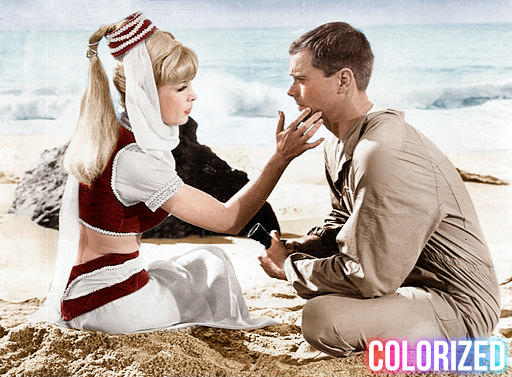
Who knows? I Dream of Jeannie may still be going strong today, 52 years after it was canceled, had it not been for the one thing that totally killed the TV series … marriage. For five seasons, fans of the fantasy show tuned in to see the obvious sexual tension between Larry Hagman, the dedicated career astronaut, and Barbara Eden, the beautiful 2000-year-old genie in a bottle. In fact, it was that sexual tension that kept the show exciting. When an exec at NBC announced that the two would marry, everyone spoke out against it – Hagman, Eden, the show’s creator Sydney Sheldon. But NBC went ahead with the TV wedding anyway. As predicted, I Dream of Jeannie’s ratings plummeted afterward. Larry Hagman later said that he heard that the show had been canceled from the guy working the gate at the studio.
Colorized
Dennis the Menace
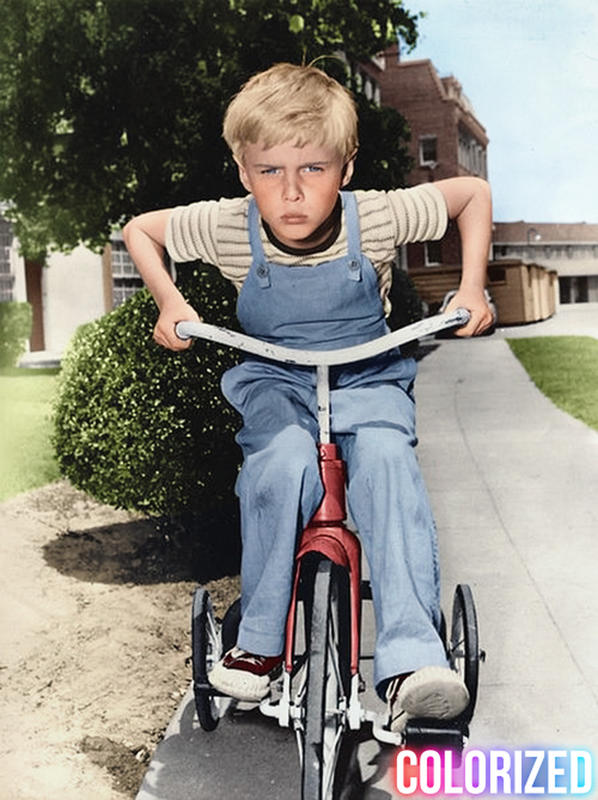
Jay North was just seven years old when he earned the role of the rambunctious and mischievous Dennis in the TV series, Dennis the Menace, which was based on a comic strip of the same name. The show’s title may lead you to believe that the young Dennis was a rotten brat who was always causing trouble. In reality, aside from the pilot episode of the series, in which Dennis tricks his babysitter, sneaks out at night, and goes to the movies, Dennis never misbehaves. All of the antics are the result of him trying too hard and being overzealous. You may find it ironic that Jay North, the precocious child actor who played Dennis, quit show business and, as an adult, he worked as a corrections officer and administrator for the Florida juvenile justice system, devoting his career to troubled youths.
Colorized
Lassie
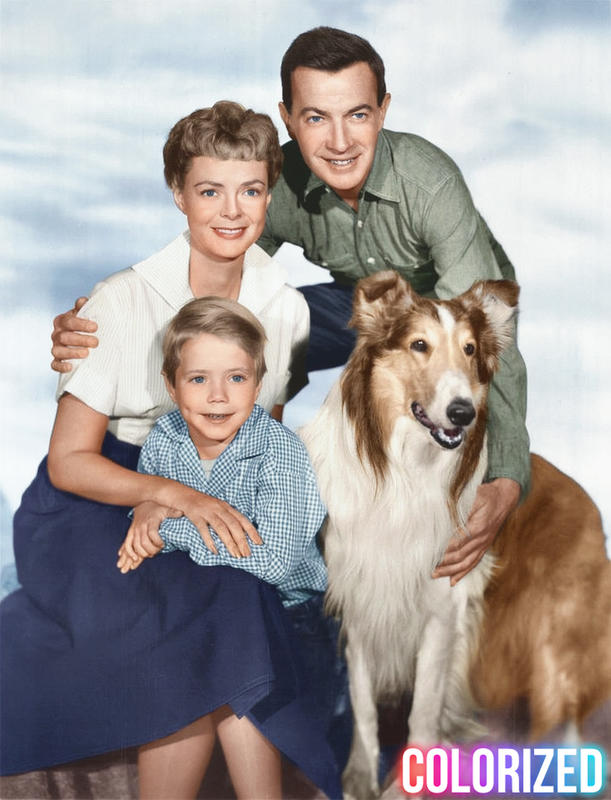
Before June Lockhart assumed the role of Ruth Martin on the long-running TV series, Lassie, actress Cloris Leachman had the role. She appeared in 28 episodes of Lassie in 1957 and 1958, but she was not a good fit on set. According to reports, she disliked her role and felt stifled playing a farm wife. In fact, Leachman refused to sign her contract, in part because she refused to engage in promoting the sponsor’s products, as was customary in the 1950s. One of the sponsors of Lassie was Campbell’s Soup. Leachman reportedly told the execs at Campbell’s, “I make my own soup. I don’t eat yours.” On screen, viewers found Leachman to be stiff and unappealing. After the 1958 season, she was fired and replaced by June Lockhart.
Colorized
Wagon Train
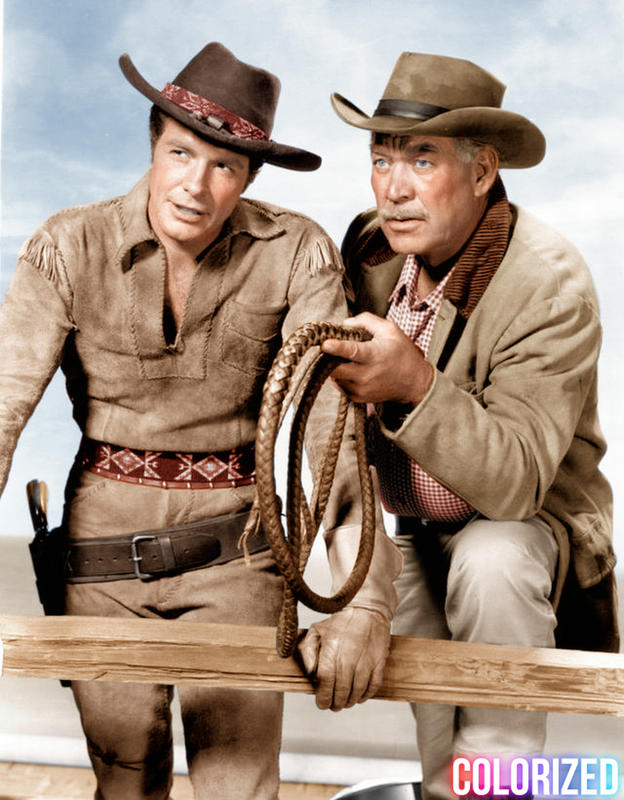
On TV’s Wagon Train, Major Seth Adams, played by Ward Bond, and Flint McCullough, played by Robert Horton, worked together to lead pioneers into the western wilderness. Off screen, however, the two were bitter rivals. According to stories, Bond was jealous because Horton was a fan favorite. As the actor getting top billing on the show, Bond thought he should be getting the most fan mail, but that wasn’t happening. He complained to the show’s producers, and they asked the writers to reduce the number of lines Horton’s character had and to write storylines that made Bond’s character stand out more, but that just fueled the feud. Horton accused Bond of spreading rumors that he was gay even though he had been married twice. Allegedly, the two actors talked it out and settled their differences, then two days later, Bond suddenly died after having a massive heart attack.
Colorized
Leave it to Beaver
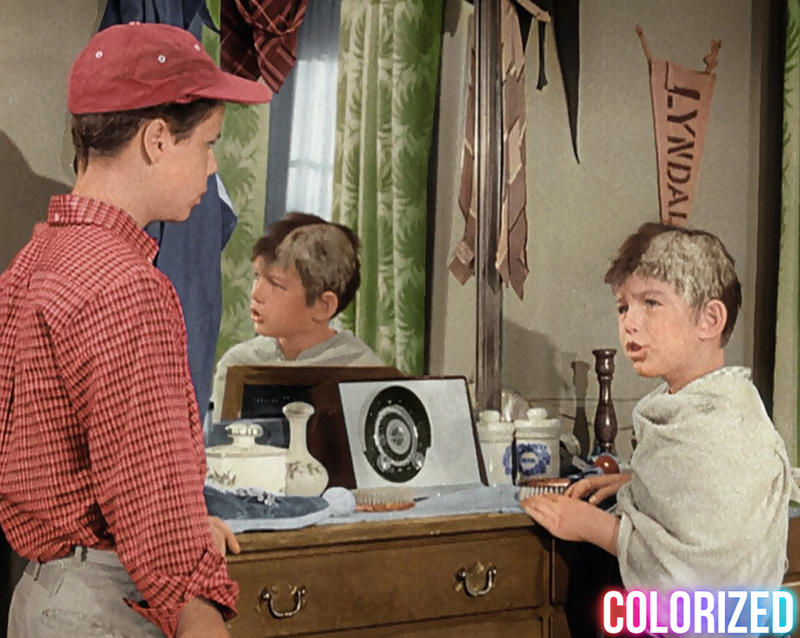
Here’s a weird fact about the wholesome family sitcom, Leave it to Beaver, which ran from 1957 to 1963. It was the first television show to show a toilet on air. Well, it wasn’t the whole toilet – it was just the tank part – but it was still enough to throw the critics into a tizz. Maybe the writers wanted to purposely shock the critics or maybe they just want to inject some realism into the show. Either way, there were so many shots of Wally and Beaver’s bathroom that the show made television bathroom history. Viewers could see into the boys’ bathroom, glimpsing the bathtub, sink, and shower curtain. In one episode, Wally puts a baby alligator in the toilet tank. Yet another episode takes place almost entirely in the boys’ bathroom. Leave It to Beaver helped normalize bathrooms on TV and remove the shock value of them.
Colorized
The Munsters
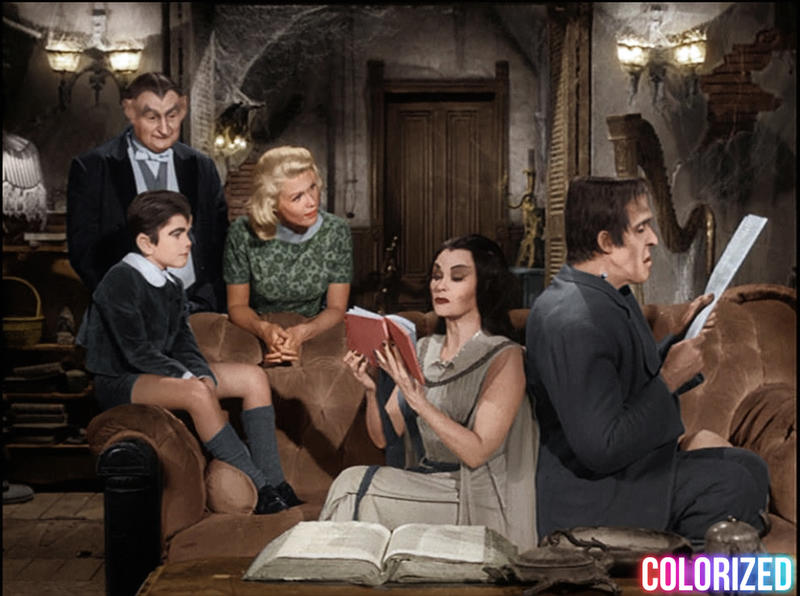
The Munsters pulled a switch-ero and fooled many of their loyal followers. Here’s what happened. When the show debuted in 1964, pretty blonde Beverley Owen was cast in the role of Marilyn, the only normal member of the Munster family. As the story goes, Owen only accepted the part because she assumed the show would bomb. After all, the premise of the show was rather ridiculous. Surely it would be canceled after just one season. That’s the only reason Owen agreed to move to Los Angeles and leave her beloved boyfriend behind in New York City. But the show wasn’t a flop. Owen was heartbroken to be away from her boyfriend and spent so much time crying on the set that the other cast members begged the studio to release her from her contract. Owen was replaced by another pretty blonde, Pat Priest, who looked so much like Owen that many fans didn’t even notice the switch.
Colorized
The Goldbergs
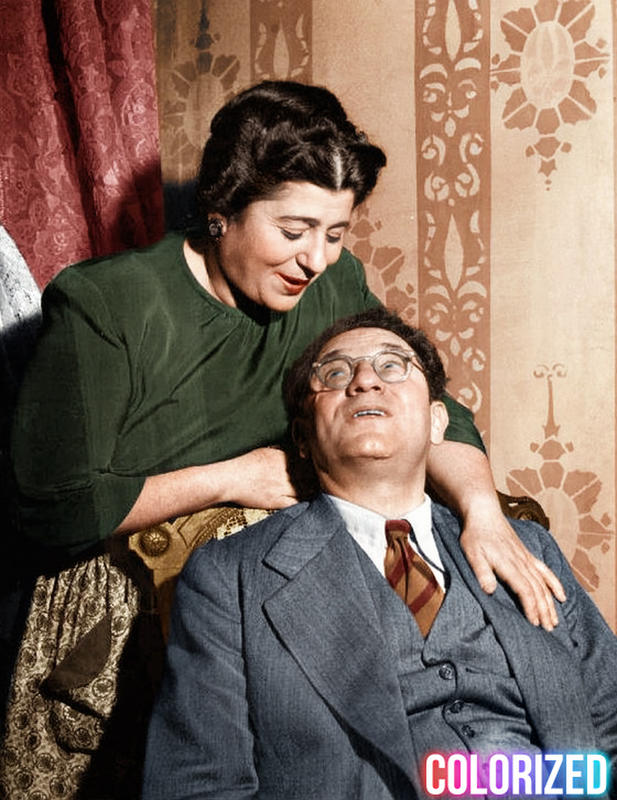
When The Goldbergs hit the small screen in 1949, it marked the first time that a Jewish American was represented on television. The series, which ran from 1949 to 1956, showed audiences that Jewish families were no different than other American families. There were family dynamics, moments of profound sadness, and times when the family laughed and joked together. The Goldbergs enjoyed a long and diverse run. The show began as a radio broadcast (from 1929 to 1946), then was adapted into a stage play in 1948 called Me and Molly. In 1944 and 1945, the characters were used in a comic strip. Finally, the show hit television. It was all thanks to the efforts of Gertrude Berg who developed the characters and the format and who starred in the radio and television versions of the show.
Colorized
The Patty Duke Show
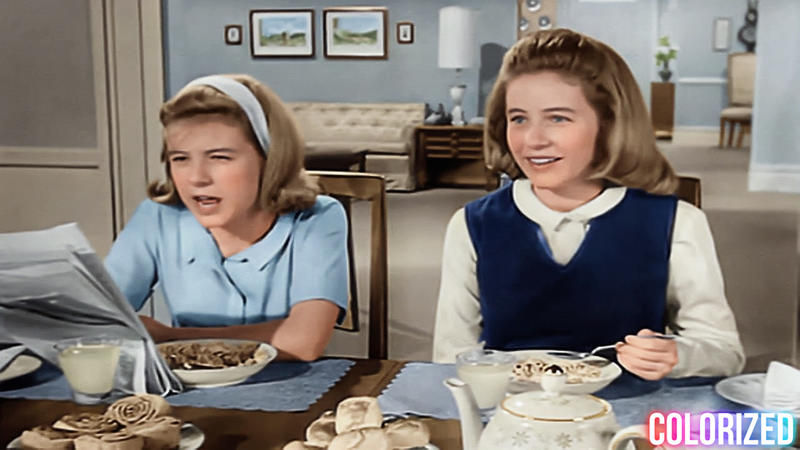
The Patty Duke Show from the mid-1960s turned talented teen actress Patty Duke into a big star. On the series, the young star showed off her talents by playing two characters, typical American teen Patty Lane and her prim and proper identical Scottish cousin, Cathy Lane. Since the show’s star was only 16 years old when the series premiered, it was decided that show would be filmed in New York. This was an unusual move, but it allowed the studio to get around California’s strict child labor laws. As an added bonus, Patty Duke lived in New York, so it was an easy commute to the set every day. During the 1964-1965 season, Duke turned 18. ABC announced it was moving the production of the show to Los Angeles, but Duke refused to make the move. She also refused to commute back and forth from NYC. As a new adult, Duke was also trying to free herself from the control of her managers and guardians and the toxic environment that they created for her. It was all a perfect storm that left ABC with no choice but to cancel the series at the peak of its popularity.
Colorized
Lost in Space
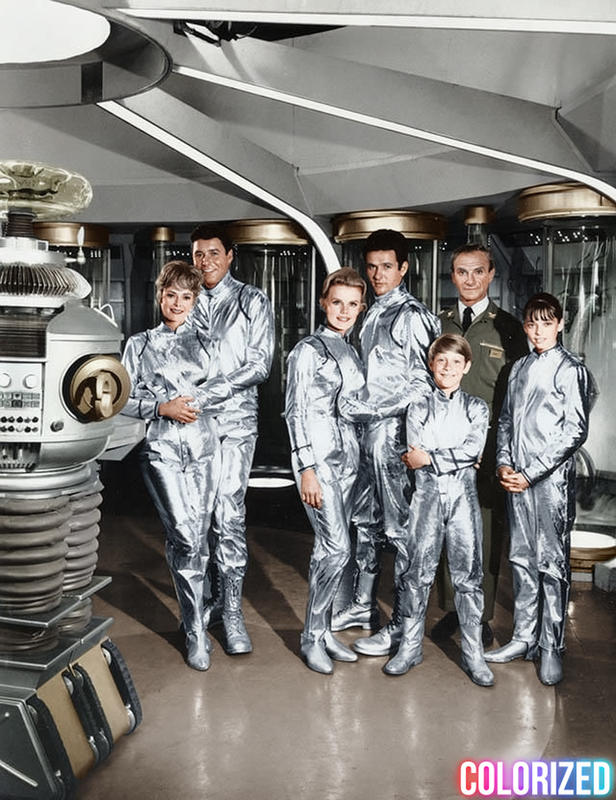
Lost in Space, the campy mid-1960s sci-fi family adventure series has become synonymous with the catchphrase, “Danger, Will Robinson!”. But did you know that that line was only used once in the series? The Robot warns, “Danger! Danger!” several times throughout the 83-episode run of the show, but Bill Mumy’s character’s name, Will Robinson, was only added after the warning one time. Yet, it remains a memorable moment in the show. In fact, it is the catchphrase that is most commonly associated with the show, beating out Dr. Smith’s “Oh, the pain! The pain.”
Colorized