
Throughout U.S. history, transformative movements and protests have reshaped the nation’s identity, pushing the boundaries of justice, equality, and freedom. From the marches of the Civil Rights Movement to the anti-war demonstrations of the Vietnam era, these actions have challenged the status quo and inspired change. Each movement arose in response to injustices, giving hope to the silenced. Whether it was the Chicano Movement demanding cultural pride and labor rights or the Women’s Liberation Movement demanding gender equality, these moments were not merely protests, they were turning points in American society. Here are four major movements, their historical context, the courageous individuals who fueled them, and their lasting impact.
Anti-War Protests
The anti-war protests of the 1960s and 1970s in the United States were powerful responses to the Vietnam War, a conflict that deeply divided the nation. Sparked by growing discontent with U.S. foreign policy and an increasing number of casualties, these demonstrations defined the times. Students were at the forefront. In 1965, students at the University of Michigan organized the first teach-ins, combining lectures, debates, and music to critique the war. The movement swelled after the Tet Offensive in 1968, as images of the war’s brutality dominated television screens. In 1969, over 500,000 people gathered for the Moratorium to End the War in Vietnam, marching peacefully in Washington, D.C. The haunting chant, “Hell no, we won’t go,” showed a widespread resistance to the draft, particularly among young men who questioned why they were sent to fight in a distant, unwinnable war. The protests pressured policymakers, resulting in the U.S. withdrawal in 1973.
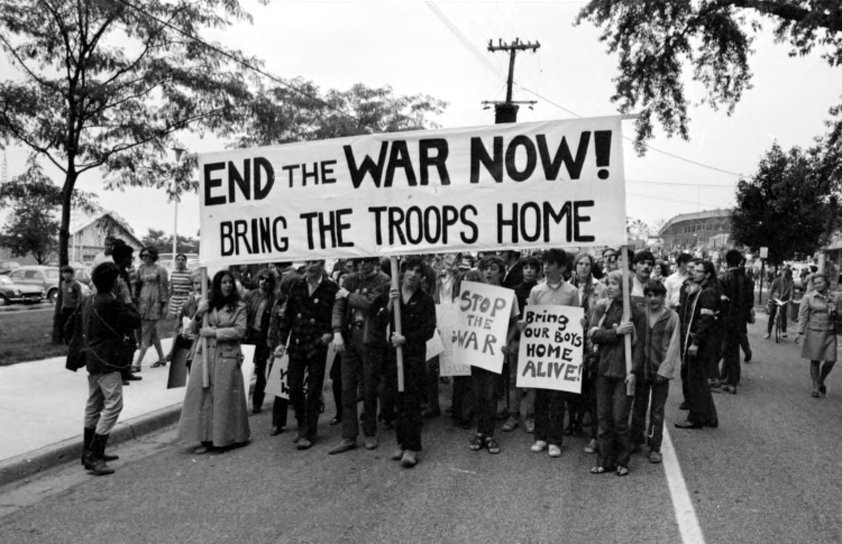
Getty Images
Chicano Power and the Chicano Movement
The Chicano Movement, or El Movimiento, started in the 1960s and 1970s as Mexican Americans sought to challenge injustices and claim their cultural identity in the United States. The movement focused on issues such as educational inequalities, labor exploitation, and political underrepresentation. In 1965, César Chávez and Dolores Huerta led the Delano grape strike in California, uniting Filipino and Mexican farmworkers under the United Farm Workers (UFW). Through boycotts, marches, and nonviolent protests, they demanded fair wages and humane working conditions, drawing national attention to agricultural workers’ plight. In cities, the Chicano student movement, led by the East Los Angeles walkouts of 1968, highlighted the poor quality of education in predominantly Mexican American schools. Thousands of students left their classrooms chanting “Chicano Power!” and demanding culturally relevant curricula and better resources.
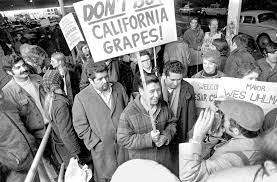
Getty Images
The Women’s Liberation Movement
The Women’s Liberation Movement, in the 1960s and 1970s, was a movement that focused on equal rights for women, with women slowly starting to critique their roles in society, challenging inequalities in work, education, and family life. A pivotal moment came in 1963 with the publication of Betty Friedan’s book, The Feminine Mystique, which exposed the unhappiness of suburban housewives confined to domestic roles. This started widespread recognition of “the problem that has no name,” pushing women into the public sphere. The National Organization for Women (NOW), founded in 1966, led campaigns for workplace equality, reproductive rights, and the passage of the Equal Rights Amendment. Grassroots activism was also important. Women’s groups flourished, creating spaces to share personal experiences of discrimination. These conversations led to iconic moments, such as the 1968 protest at the Miss America pageant, which criticized beauty standards and objectification. The movement’s impact changed American life, starting with Title IX of the Education Amendments Act (1972) which expanded opportunities for women in education and sports.
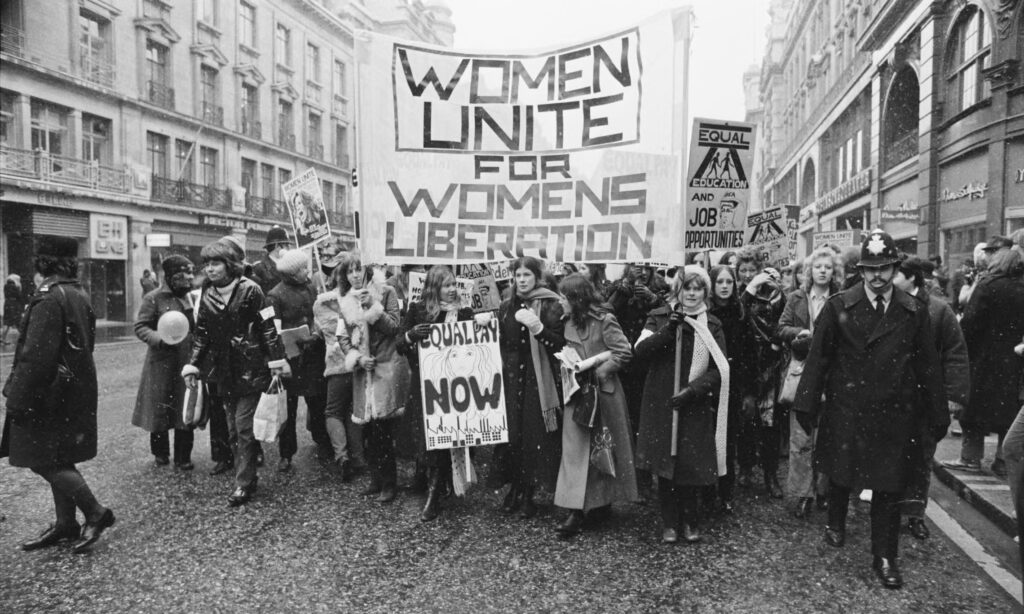
The Civil Rights Movement
The Civil Rights Movement in the United States, spanning the 1950s and 1960s, marked an important chapter in the nation’s struggle for equality. Against the backdrop of Jim Crow laws that enforced racial segregation, African Americans and allies gathered to take apart systemic discrimination through acts of courage and persistence. One of the movement’s most defining moments came in 1955 with Rosa Parks’ quiet defiance in Montgomery, Alabama. Her refusal to give up her bus seat to a white passenger catalyzed the Montgomery Bus Boycott, a year-long protest that underscored the power of collective action. The March on Washington in 1963, where Dr. Martin Luther King Jr. delivered his famous “I Have a Dream” speech, highlighted the movement’s goals for a society where character, not color, defined opportunity. The movement’s achievements were profound: the Civil Rights Act of 1964 and the Voting Rights Act of 1965 took down legal barriers to racial equality, proving that change is possible through persistence and unity.

Getty Images