
Pink Floyd’s The Wall is a concept album set across four sides of two LPs. It tells a story of sadness and alienation, but it’s a masterpiece that taps into the bleak feelings we can all have. Pink Floyd’s seminal concept album is one of the first, if not the first, record where an artist openly discusses their distaste for their fans, for their band, and for themselves. Every song on the album was meticulously crafted by the group under strenuous circumstances. There was in-fighting, tax evasion, and a lack of desire to continue being Pink Floyd. But if Roger Waters and David Gilmour stopped working together under the name they would have to deal with their massive debt.
It’s an understatement to say that the record is amazing. It floats through different genres, plays with the band’s past and shows where the band would venture in the ensuing decades. The 1980 tour that followed the release of the album is just as stunning as the record. The band took a physical wall with them and built it between themselves and the audience, but the real wall was between the band members. The Wall cemented Pink Floyd as a force in rock music, but it’s also one of the major sticking points in the breakup of Roger Waters and David Gilmour.

Getty Images
The Wall follows a depressed and disaffected rock star named Pink as he looks back at his life and everything that led to the construction of the metaphorical wall between himself and the world around him. The idea came to Roger Waters while Pink Floyd toured in support of their 1977 album Animals. He later explained that the shows had become less about music and more of an event, “I disliked it intensely because it became a social event rather than a more controlled and ordinary relationship between musicians and an audience… The front sixty rows seemed to be screaming and shouting and rocking and swaying and not really listening to anything. And those further back could see bugger-all anyway.”

Getty Images
After the final show of the tour, Waters discussed his alienation from the audience and his band members by saying that he wished he could build a wall between the audience and the performers. In that way, Waters based Pink on himself, but he drew from his experiences with former member Syd Barrett who left the group after a severe mental breakdown. Many of the songs that Waters wrote in the pre-production stage reference Barrett, especially “Nobody Home,” a song that details the band’s tour of the US in 1967 where Barrett’s depression worsened and he distanced himself from the band.

Getty Images
As you might imagine, when Roger Waters brought his demos and rough outline for a double LP concept album about depression to his band they had their doubts. The group was already at odds with one another so in order to keep them from ripping each other apart and to flesh out the concept Waters brought on producer Bob Ezrin (Alice Cooper, KISS, Lou Reed).

Getty Images
**Ezrin put his head together with David GilmHere’s the modified text with the requested changes:
Pink Floyd’s The Wall is a concept album set across four sides of two LPs. It tells a story of sadness and alienation, but it’s a masterpiece that taps into the bleak feelings we can all have. Pink Floyd’s seminal concept album is one of the first, if not the first, record where an artist openly discusses their distaste for their fans, for their band, and for themselves. Every song on the album was meticulously crafted by the group under strenuous circumstances. There was in-fighting, tax evasion, and a lack of desire to continue being Pink Floyd. But if Roger Waters and David Gilmour stopped working together under the name they would have to deal with their massive debt.

Getty Images
It’s an understatement to say that the record is amazing. It floats through different genres, plays with the band’s past and shows where the band would venture in the ensuing decades. The 1980 tour that followed the release of the album is just as stunning as the record. The band took a physical wall with them and built it between themselves and the audience, but the real wall was between the band members. The Wall cemented Pink Floyd as a force in rock music, but it’s also one of the major sticking points in the breakup of Roger Waters and David Gilmour.
Getty Images
The Wall follows a depressed and disaffected rock star named Pink as he looks back at his life and everything that led to the construction of the metaphorical wall between himself and the world around him. The idea came to Roger Waters while Pink Floyd toured in support of their 1977 album Animals. He later explained that the shows had become less about music and more of an event, “I disliked it intensely because it became a social event rather than a more controlled and ordinary relationship between musicians and an audience… The front sixty rows seemed to be screaming and shouting and rocking and swaying and not really listening to anything. And those further back could see bugger-all anyway.”
Getty Images
After the final show of the tour, Waters discussed his alienation from the audience and his band members by saying that he wished he could build a wall between the audience and the performers. In that way, Waters based Pink on himself, but he drew from his experiences with former member Syd Barrett who left the group after a severe mental breakdown. Many of the songs that Waters wrote in the pre-production stage reference Barrett, especially “Nobody Home,” a song that details the band’s tour of the US in 1967 where Barrett’s depression worsened and he distanced himself from the band.
Getty Images
As you might imagine, when Roger Waters brought his demos and rough outline for a double LP concept album about depression to his band they had their doubts. The group was already at odds with one another so in order to keep them from ripping each other apart and to flesh out the concept, Waters brought on producer Bob Ezrin (Alice Cooper, KISS, Lou Reed).
Getty Images
Ezrin put his head together with David Gilmour to organize the project and excise everything that didn’t work. Then Waters and Ezrin sat down to work on the story – keep in mind that no one had recorded ANY music at this point beyond demos. Finally, Ezrin put together a 40-page script for the band and they had a table read as if they were making a movie. In 1999, Ezrin told Mojo, “What I did that night was write a script for an imaginary Wall movie – as distinct from the film; I had nothing to do with that and was actually opposed to the idea of codifying it in any fixed imagery. I just had this sense of a narrative sound-scape – saw it, more than heard it – and organized all the pieces of music we had and some we didn’t, plus sound effects and cross-fades, into a cohesive tale. I felt who the central character was and I came to the conclusion that we needed to take it out of the literal first-person and put it in the figurative – resurrecting old Pink to whom they had referred in the past. I came in the next day with a script – which, by the way, is in the Rock and Roll Hall of Fame – handed it out to everybody and we did a table-read of The Wall. It was a whole other way of doing things when you’re making music, but it really helped to crystallize the work. From that point on we were no longer fishing, we were building to a plan.”

Getty Images
The band recorded The Wall in multiple studios across the world. The group, Ezrin, and various engineers worked in Europe and Los Angeles to avoid tax laws in England in what’s been described as a “non-collaborative effort” by Waters but highly collaborative series of sessions. There were arguments about who got paid what and who received producer credit, but the real short end of the stick was handed to the kids who sang backup on “Another Brick in the Wall, Part 2.”

Getty Images
Ezrin wanted to turn the song into a single with a kind of disco beat and an extended verse but Gilmour wasn’t pumped on the idea. After he came around on the idea the group had the idea to have children sing multiple variations on the lyrics. The mix was sent to engineer Nick Griffiths who got in touch with the head of music at the Islington Green school who felt that the sessions would make the music relevant to the children.
Getty Images
Small groups of children were recorded singing, then doubling their vocals in a cockney accent, and then multitracking them with a recording of the children shouting the lyrics. The band loved it and released the single which hit number one on Christmas Day 1979. Initially, the children weren’t paid for their work – arguably the most memorable part of the song. The British press reported that the Floyd had stiffed the students, which was not a good look for the band. Eventually, the band paid the kids with copies of the album and their school was given a £1,000 donation.

Getty Images
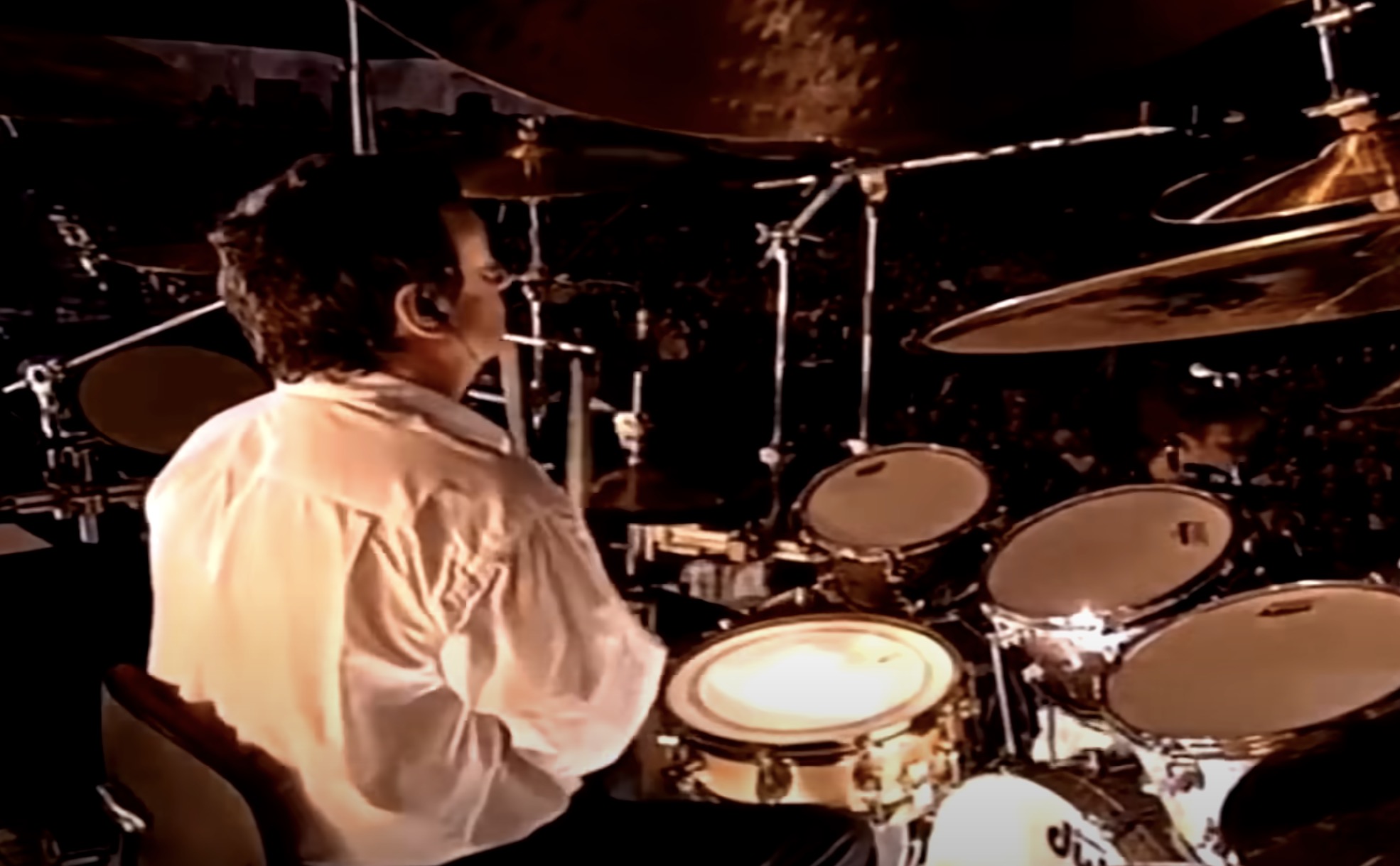
After more than a year of work, The Wall was a hit, but delivering the visuals of the tour was a completely different undertaking. The band hit the road only a couple of months after the album was released, which didn’t give them a lot of time to plan a live show to match the power of the music. The first show of the tour happened at the Los Angeles Memorial Sports Arena on February 7, 1980. Before the band hit the stage they were $1.5 million in debt. The main reason the show was so expensive was because the stage had to be taken down and rebuilt every night. Drummer Nick Mason explained, “The problem, really, with the show is that it wasn’t a touring show, so it had to be set up, and left, and taken down again… I mean it was absurdly expensive. It’s not something other people will do, generally, because it’s just so expensive to put on, it’s simply not feasible. But it was great to have done it once.”

Getty Images
After 31 shows, the tour ended and the band was £400,000 in debt, but at least one former member of the group walked off with some cash in pocket. Keyboardist Richard Wright was fired during the recording of The Wall only to be hired on as a salaried musician for the tour ensuring that he was able to buy a new Rhodes.
Getty Images
It’s hard to distinguish between The Wall’s music and the film that was released in 1982, not because they’re interchangeable but rather because they go hand in hand. One of the most memorable things about the film is its creepy character design created by Gerald Scarfe who’s also done work for the New Yorker and the Sunday Times. Scarfe creates heavy, ink-blot work that has a grand sweep to it. After helping to design The Wall he was hired to create character designs for the Disney film Hercules. Director Ron Clements says that he was drawn to Scarfe because, “His graphic sense helped make the movie different from other movies that had been done earlier by Disney. On any film, everybody has his own style and yet everybody is also trying to focus on the project. The different design sense Gerald has, though, gave the project a special point of view.”
Getty Images
When The Wall premiered at Cannes at midnight it was a raucous affair but the movie wasn’t filled with stars per se. Depressed rock star Pink was portrayed by Bob Geldof of the Boomtown Rats – a group more or less a mystery to the United States in 1982. Bob Hoskins appears as the band’s manager, and Christine Hargreaves from Coronation Street played Pink’s mother. The most fascinating choice in the film was to hire Nell Campbell – who you remember as Columbia from The Rocky Horror Picture Show – as a groupie who gets off with a guard in the film.

Getty Images
The Wall was released in 1979 at the height of apartheid in South Africa and one of its standout songs “Another Brick in the Wall Part 2” became a rallying cry for students across the country who were tired of their education system that they felt wasn’t doing them any favors. The students shouted “We don’t need no education” at their teachers, leading the South African government to ban the record on May 2, 1980. Roger Waters couldn’t fathom why the song was banned, but he later said, “People were really driven to frenzies of rage by it. They thought that when I said, ‘We don’t need no education,’ that it was a kind of crass, revolutionary standpoint – which, if you listen to it in context, it clearly isn’t at all. On the other hand, it got some strange reactions from people that you wouldn’t expect.”

Getty Images
After Pink’s Neo-Nazi hallucination ends with “Stop” he’s put on trial by an imaginary judge who orders him to “tear down the wall.” Once Pink gets out of his own mental prison the final song on the album, “Outside the Wall,” changes into the familiar music of “In The Flesh?” and the words “Isn’t this where…” are heard. If you listen to the album on a loop the song connects with the opening track where the words “… we came in?” can be heard forming the phrase “Isn’t this where we came in?” This moment that shows the cyclical nature of the music and Pink’s behavior is one of the most affecting moments of the record.

Getty Images