

Some TV shows never lose their charm, no matter how many years (or decades) pass. They’re the kind of classics that stick with you—whether it’s the unforgettable theme songs, the quirky characters, or the hilarious moments you can still quote by heart. These shows have a way of pulling us back in, making us laugh, cry, and sometimes wonder how anyone ever thought those hairstyles were a good idea. Join us as we revisit the timeless gems that prove some things on TV never go out of style.
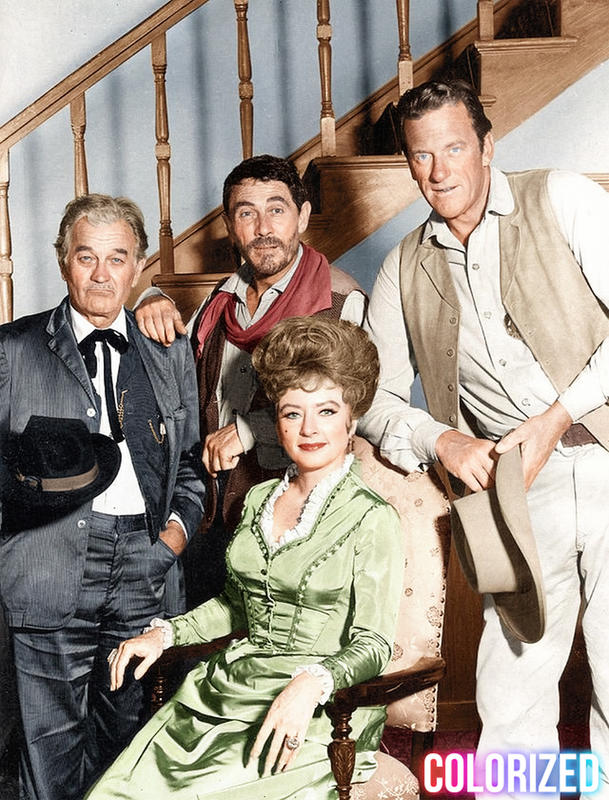
Actress Amanda Blake lived up to her Miss Kitty persona even after TV’s Gunsmoke ended in 1975. Blake and her fourth husband, Frank Gilbert, ran an experimental breeding program for big cats and were among the first people to successfully breed cheetahs in captivity. Even while she was starring as Miss Kitty on Gunsmoke, Blake had an interest in animal welfare. She was known for bringing her pet lion to the Gunsmoke set and she donated heavily to the Performing Animal Welfare Society. She even served on the board of directors of the Humane Society of the United States.
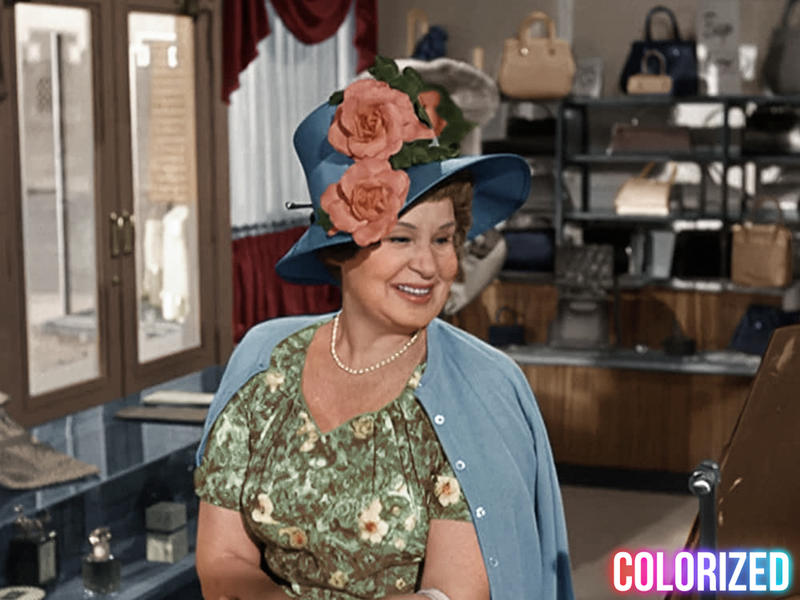
After four successful seasons on NBC, Hazel, a series that followed the life of a live-in housekeeper for the busy Baxter family, the show was abruptly canceled. Soon after, CBS acquired the show, but they made some notable changes. The actors who played Mr. and Mrs. Baxter were dropped from the series and only Shirley Booth, the actress who played Hazel, and the two Baxter children were kept. The storyline was written that the Baxters moved out of the country to pursue a work opportunity, but they wanted their children to remain in school. The writers made this plausible by having Hazel and the children move in with a never-before-mentioned uncle and aunt. This new rendition of the show lasted only one season on CBS, but it did feature a new cast member, a young, teenage Ann Jillian who played Millie, the uncle’s receptionist.

If you watch the credits for Mr. Ed, you will see an unusual screen credit that says, “Format Developed by Sonia Chernus”. Here’s how that came about. Liberty magazine printed a short story called “The Talking Horse” by Walter Brooks in its September 18, 1937, issue. This was the first introduction of the Mr. Ed character. Sonia Chernus loved the short story. A few years later, after Sonia Chernus graduated from UCLA, she took a job at Warner Bros Studio as a story editor, working under Arthur Lubin. She repeatedly pushed for the development of a TV sitcom about a talking horse, based on the short story Brooks wrote. Finally, Warner Bros. agreed to develop the talking horse character into a television show and Mr. Ed was born.
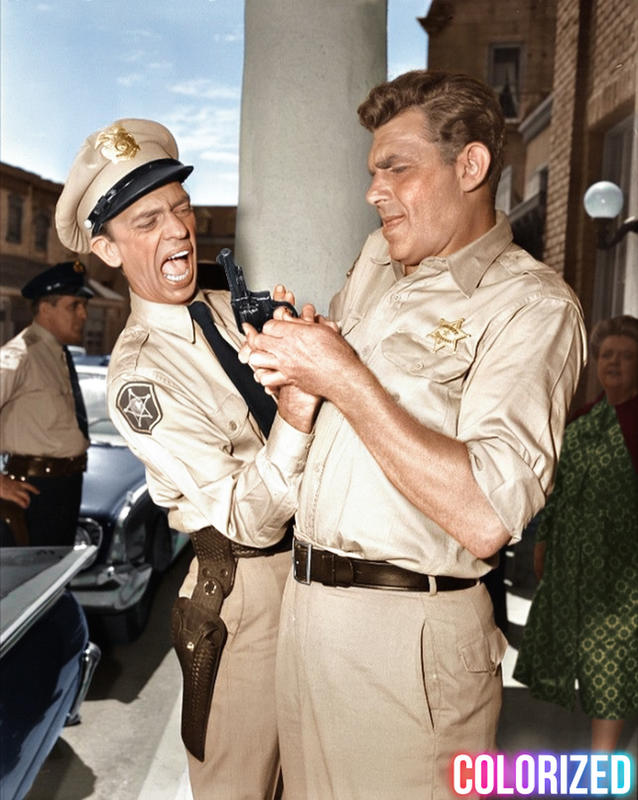
Andy Griffith and Don Knots got along famously on the set of The Andy Griffith Show even if their characters seem to have some good-natured conflict. But there was one cast member who often butted heads with Griffith. That was Frances Bavier who played Aunt Bea. Aunt Bea was such a loving and nurturing character on the show so you might be surprised to hear that she was described as contentious, moody, overly sensitive, and difficult to direct. She was not happy with her role as Aunt Bea and took out her frustrations on Griffith and others. As the story goes, Griffith and Ron Howard tried to visit Bavier at her home in 1972, more than four years after The Andy Griffith Show ended, and Bavier refused to let them in. In 1989, a terminally ill Bavier reached out to Griffith to apologize for her past behavior.
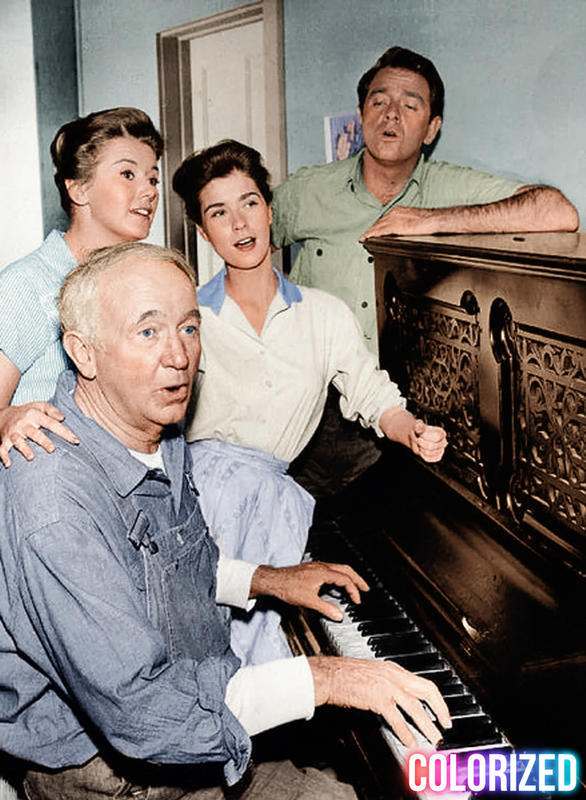
Richard Crenna purposely spoke in a squeaky, high-pitched voice when he played Walter Denton on Our Miss Brooks in 1952. So, when he took the role of Luke McCoy on the TV western series, The Real McCoys, and used his natural speaking voice, a deep, rich voice, fans were stunned. The Real McCoys followed a family who relocated to California from West Virginia. The family included a grandfather, his grandson (Crenna’s character), the grandson’s young wife, and the grandson’s two young siblings. The show followed their family dynamics and how they worked to make a living on a farm the family inherited. The series ran for six seasons on two different networks. From 1957 to 1962, it was broadcast on ABC. For the 1962-1963 season, it ran on CBS.

The TV sitcom, The Bob Cummings Show, which ran from 1955 to 1959, was notable for a few reasons. First, it was the first show in television history to make its debut as a midseason replacement show. Second, The Bob Cummings Show helped launch the careers of several people both in front of and behind the camera. Actress Ann B. Davis, who went on to play Alice in The Brady Bunch, portrayed Cummings’ assistant, Schultzy. In fact. Davis won two Emmy Awards for this role. In addition, Paul Henning got his start on The Bob Cummings Show. The writer, creator, and producer went on to such memorable projects as Green Acres, Petticoat Junction, and The Beverly Hillbillies.

Do these two guys in this promo pic for the short-lived TV western, The Westerner, look familiar? The tall one is Brian Keith who later plays Uncle Bill on Family Affair. The other one is Spike, one of Hollywood’s most memorable canine actors. In The Westerner, Spike plays the role of Brown, the faithful companion of Keith’s drifter character, Dave Blassingame. In his best-known role, Spike plays a dog named after a different color … yellow. Yep, Spike was the loveable lab-mastiff mutt who starred in the 1957 tear-jerker Old Yeller. The former rescue pup also appeared in A Dog of Flanders, The She-Creature, and The Silent Call.
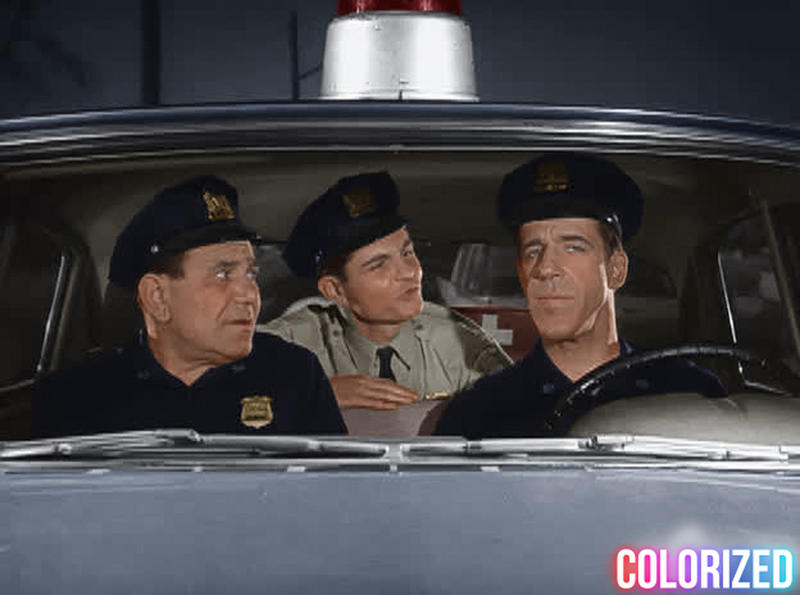
It was like The Odd Couple, but in a squad car. The creators of Car 54, Where Are You? wanted to depict two different personalities but they also wanted a visual representation of their differences. That’s why they cast 6-foot, 5-inch Fred Gwynne as Francis Muldoon and 5-foot, 7-inch Joe E. Ross as his partner, Gunther Toody. Appearances aside, Gwynne’s character was a reserved, brainy, and shy bachelor, while Ross’s character was dim-witted, loud-mouthed, and married to a hen-pecking wife. The juxtaposition of the two unlikely partners made the series popular among viewers from September of 1961 to April of 1963.
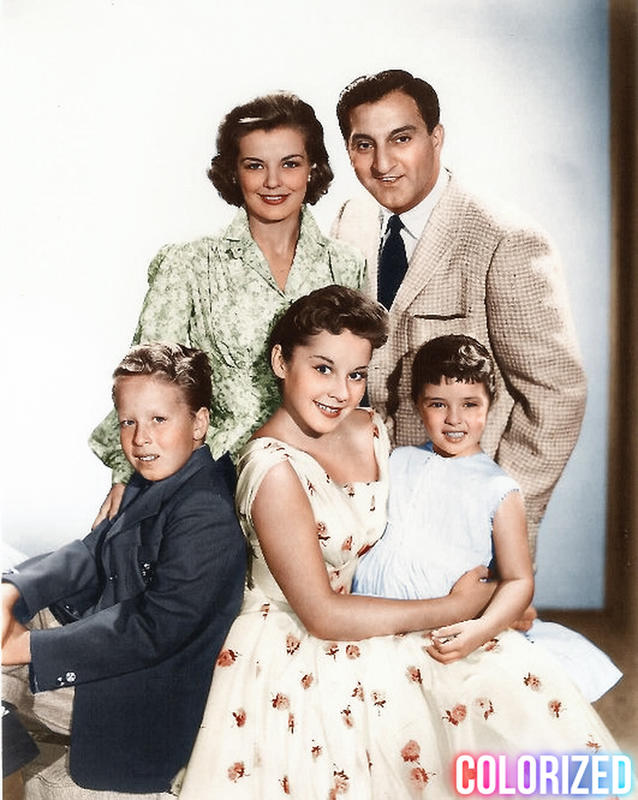
After four years on the air, Make Room for Daddy underwent some major changes. First, the series was renamed The Danny Thomas Show. More significantly, Jean Hagen, who played Thomas’s wife in the series, announced she was quitting the show. Thomas and the show’s producers were left in a pickle. Should they end the series or readjust without Hagen? They opted to continue. At the start of the fourth season, the audience learned that Hagen’s character had died and Thomas’s character, a nightclub entertainer, was left a widower with children to raise. This was controversial stuff in the 1950s. No TV sitcom character had been killed off before and the studio wasn’t sure how fans would handle it. The alternative, however, was to have the couple divorce, but that certainly wouldn’t have gone over well with the 1950s audience.

Here’s a fun fact about the 1959-1963 television sitcom, The Many Loves of Dobie Gillis. Joe Ruby and Ken Spears, the creators of the Hanna-Barbera animated cartoon, Scooby-Doo, Where Are You? were inspired by the characters on The Many Loves of Dobie Gillis and based their own characters on them. The handsome and heroic Freddie Jones was, of course, patterned after Dobie Gillis, who was played by Dwayne Hickman in the TV series. Bob Denver’s hapless hippie character, Maynard Krebs, was the inspiration for Norville Rogers, better known as Shaggy. The brainy Zelda Gilroy, played by Sheila James Kuehl, on The Many Loves of Dobie Gillis was the model for Velma Dinkley, and pretty Daphne Blake was inspired by Thalia Menninger, played by Tuesday Weld.